ARCTIC


New Year's Eve has this subtle way of creating the illusion that, at midnight, everything can start again. Amidst lights in the sky and toasts, promises are made quietly—as if the universe were truly listening—and, even if only for a few seconds, we believe that the new year will be different. And, at that moment, without me even knowing it… 2026 had already decided that it would be an extraordinary year.
But even before any resolution took shape, a destination was already marked on my calendar: the Arctic. A place where the cold is not just felt—it imposes its presence.
January wouldn't be about goals. It would be about traversing extreme landscapes, facing an almost palpable silence, and chasing one of nature's most mesmerizing phenomena: the aurora borealis.
Still on the flight between Frankfurt and Alta, the transformation began outside the window. Down below, the landscape was being redrawn in white: snow-covered mountains, still lakes, paths almost erased by winter. And, for the first time while contemplating that nature without haste, the world, for me, seemed to quiet down.

At this time of year, the sun simply doesn't bother to rise completely. It's the period known as the polar night—but the name is misleading. Because the darkness is never total. There's a rare, almost suspended interval where the sky remains in a prolonged twilight. Even from my airplane seat, where everything seems untouched, the deep blue that dominated slowly changes to shades of orange, green, and violet on the horizon. It's not day. It's not night. It's something only the Arctic knows how to be.
Embarking on an expedition like this has absolutely nothing to do with putting on a nice coat, two pairs of socks, and heading out confidently, thinking you're ready. Because you're not. Minus thirty degrees is not an exception—it's routine. The cold simply imposes itself.
Even before setting foot there, I had already received an almost surgical list of what to bring: thermal underwear, a neck warmer, a windbreaker, and little "miracles" in the form of heating pads, which you stuff into your hands and feet as if your life depended on it. I confess that, most of the time, it was vital.
With the essentials packed, the next step was to face the official attire of this odyssey. At the hotel, along with the team, I tried on giant jumpsuits, sturdy gloves, and galoshes that would easily rival my dignity in size.
And here's an important warning: now is not the time to try to feel beautiful and wonderful. Forget any attempt at style, like matching pants and jackets. There's no such thing as a "look" in this glacial environment. It's about survival, not vanity.
The jumpsuit is enormous, the boots even bigger, and in a few minutes, you go from being a minimally elegant person to something very close to the Michelin Man, with zero glamour.

Interestingly, it was there that I learned one of the most counterintuitive things about the trip: the tighter the clothes, the worse. Heat needs space to circulate. It's the air between the layers that keeps you warm, not the tightness.
Another important detail is protecting the neck and jugular vein. This area acts as a kind of thermal shortcut for the body. When exposed to wind and low temperatures, rapid heat loss occurs, affecting the entire organism.
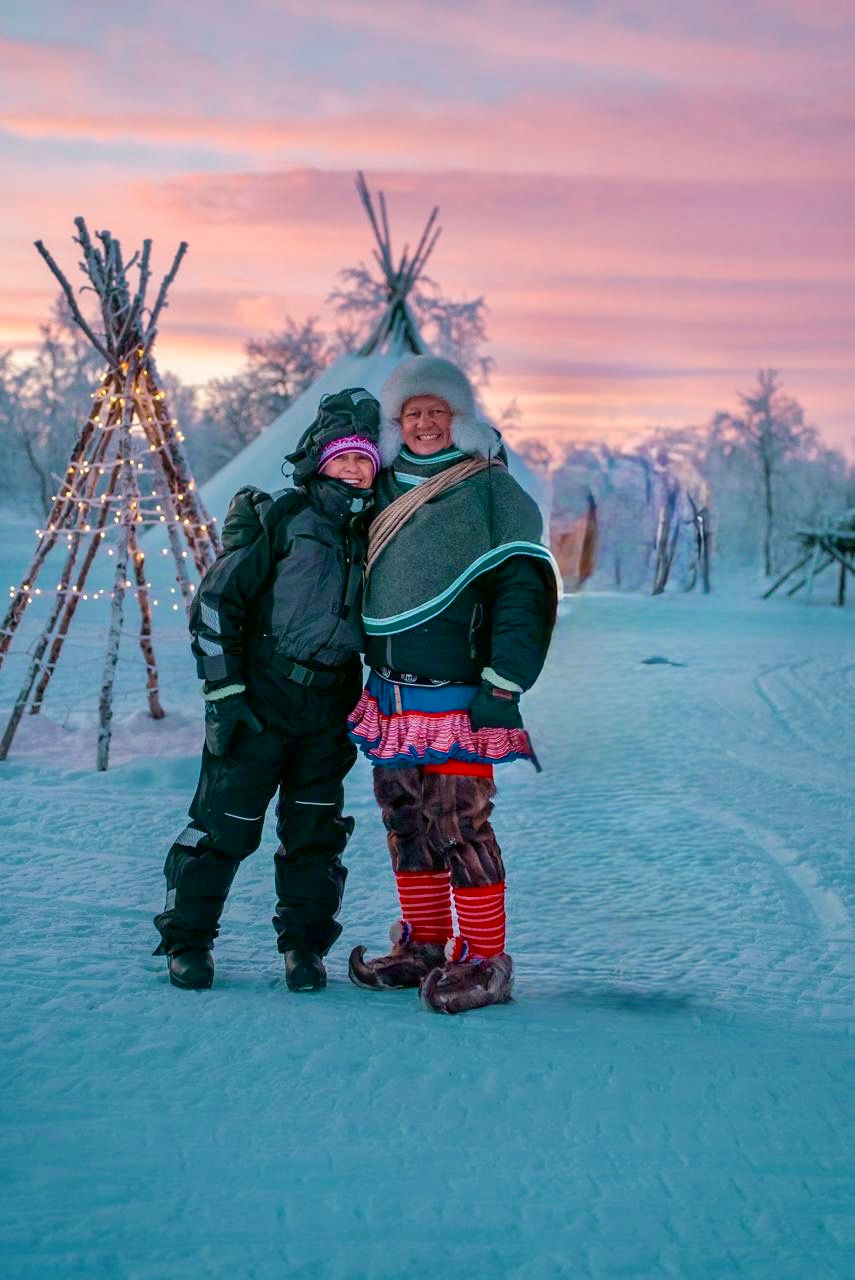
In the photo, you can see my stylish outfit—and I know exactly what you're wondering: is it comfortable? Is it practical? The answer is NO. Not at all. It's bulky and awkward, and makes you walk as if you've forgotten how your own body works. But, in that scenario, it was either that or hypothermia. And I made my choice: I opted for prudence.
Now imagine the moment when you suddenly needed to pee during the day. It was another level of challenge, because it meant dismantling all that thermal engineering. A true test of patience, overcome by immediate discouragement.
I hope no doctor hears this, but that was officially the period when I drastically reduced my water intake—all to avoid that unnecessary confrontation with the outfit.
Wearing all that gear wasn't an exaggeration—it was the bare minimum to face the cold. To give you an idea of what I'm talking about in terms of hostile temperatures, all it took was taking your hand out of your glove for a few seconds, and your body would give you a warning—and it wasn't subtle.
The cold came quickly, almost aggressively. In a matter of moments, my fingers seemed to freeze, losing all feeling, as if they ceased to belong to me. And then began the desperate mission to warm myself up again—rubbing, squeezing, trying to bring life back little by little, even with the pads inside the glove doing what they could.
And there lay my dilemma. I, completely in love with photography, faced with landscapes that begged to be captured… and a body that clearly wasn't willing to cooperate.
I confess: for a few moments, I felt almost desperate. Not because of the cold itself—but because of the feeling of being surrounded by incredible scenes and not being able to capture them when I wanted to.
But in the end, it was all rewarding — every effort found meaning there, not as a rare moment, but as a constant, night after night.
The aurora borealis filled the sky with unpredictable, almost living movements, painting shades of green and pink against the absolute white of the snow. Down below, the yellowish lights of the houses and streets created an almost intimate contrast with that immense spectacle. A moment to be felt, too surreal to explain and too beautiful to ignore. I remained there, paralyzed, trying not to miss a single second.
Meanwhile, the bonfire crackled, defying the cold in the late hours of the night, a glass of wine in hand… and, above us, something so grand that it defied any attempt at translation.
Calm down! If you're racking your brain trying to imagine all of this, relax—at the end of the text there's a video that takes you straight to that moment with me.
If sleeping at night was already a challenge—because looking away from the dawn required an almost superhuman effort—during the day the intensity didn't diminish. The adventures continued. And sometimes, at levels I hadn't exactly planned for.
One of the activities included a snowmobile ride to a remote location, followed by fishing in a hole carved into the ice. Quite "inviting," especially for a vegan like me. But, they said, catching a fish there was almost impossible. I admit that brought me some relief.
What I didn't expect was what would come next. In that endeavor, for the first time, I felt absolute panic.

Within the first half hour, the speed, combined with the biting wind, transformed the already familiar minus thirty degrees into an even more unbearable sensation. The cold wasn't just there—it pierced my soul. And, for some reason, my body simply didn't react as it should and insisted on not keeping me warm. The vapor from my breath slowly froze the fabric that should have protected my face. I trembled involuntarily; it felt like every part of me was turning to ice.
I had already faced intense weather during a transalpine ultramarathon, in snow and extreme conditions, but this was different. As we moved forward, something began to change. A growing desperation, difficult to control. Thoughts came quickly and chaotically: "How am I going to endure a whole day like this?"
I, who had always considered myself fearless, found myself in a completely different place. More vulnerable than I'd like to admit. And, of course, true to my nature… I remained silent. I wasn't going to be the one to cause a stir in the group. But inside, the tension was building, and I felt like I was falling apart. It was as if everything was slipping out of my control. Until, in an almost unexpected moment, there was a change.
Three—or perhaps four—snowmobiles collided. The ride was immediately interrupted. For safety reasons, the decision was clear: turn back. And it was at that moment that something curious happened. My body began, little by little, to react and warm up. It was the comfort of understanding that the worst was over.
While we were organizing our return and assessing the damage, we couldn't just stand still. We had to keep moving—walking in circles, without pausing—to keep warm.
But inside, things had changed. Certain that we would return, I finally managed to look around. Miles and miles of absolute white. The occasional tree lost on the horizon. A landscape that demanded silence—not because of its emptiness, but because of its grandeur.

Everything breathed at its own pace. And there, almost imperceptibly, a rosy hue began to emerge on the horizon. Nature, in its purest form, seemed to be making only one request: slow down. Just be present. Contemplate!
The ending must be pretty obvious to you, right? I arrived at the hotel, took a really hot shower, ate well, and snuggled under the covers, enjoying every second of that well-deserved comfort. That day, I confess, my tolerance for the cold had reached its limit. I only caught a quick glimpse of the sunrise and ran back to the warmth of my bed.
The human mind is like that: it barely gives you time to complain much, and it's already erasing the hardships—as if nothing had happened, ready for the next one. And it wasn't long before I was there again. I woke up the next day refreshed and set off on another adventure: hiking through the snow-covered forest.
The idea was simple — to experience it completely, without missing a thing. Chicco has three Alaskan Malamutes, and they were the ones who accompanied us that morning — majestic, charming, and breathtakingly beautiful. We wanted to stop everything and just stay there, playing with them.
I attached snowshoes to my boots — those contraptions that prevent you from sinking with each step and, as a bonus, provide some stability while walking.
Ila, Yuka, and Atka ran with the familiarity of those who knew every inch of that path. They plunged their snouts into the snow and dug up twigs, as if it were a giant white playground.

Faced with that landscape, I did what any human being would do: I threw myself on the ground to make a snow angel. At that moment, I would have said that the cold of the previous day had been pure imagination.
And of course, I couldn't resist — I shook a tree to provoke that "rain" of snow falling on me. The previous day definitely didn't feel so heavy anymore.
And continuing with the must-see experiences, yes, I visited an ice hotel. Built each winter with blocks taken from the Alta River, it houses rooms, a bar, and even a chapel. An ephemeral spectacle: when spring arrives, it simply melts away, ceasing to exist.
But this lady speaking to you knows exactly where her limits lie. I admire, contemplate, photograph… but sleeping there is another level of commitment. I prefer, without any guilt, the comfort of conventional hotels — where flannel pajamas are enough and freedom of movement is a guaranteed luxury. Because, let's face it, sleeping in freezing conditions is not for amateurs.
Still, I didn't miss the essential moment — I toasted the experience with a drink served, naturally, in a glass of ice.

And, as if everything I had already experienced wasn't enough, the itinerary went all out at the end—with one of the most memorable encounters of the trip. I was greeted by Aslak Sokki, a reindeer herder from the Sami people, whose presence exuded the unwavering calm of someone who lives in the rhythm of the seasons, not the clocks.
Dressed in traditional attire that blends protection and identity, he carried on his body more than just shelter from the cold: he carried ancestry.
There, it wasn't just about surviving, but about belonging. The Sami have occupied these lands for generations, in a balance dictated by respect, not haste. It's knowledge you won't find in books; it's inherited.
It's impossible to talk about them without mentioning the reindeer. More than just a source of sustenance, they are family. They grow up together, go through cycles, and connect the past to the present in a relationship of care and deep understanding of nature. There is a delicacy that contrasts with the harshness of the environment—a way of life that doesn't try to dominate, but to coexist. Realizing that, even at the planet's edge, there are still those who walk with the environment, and not against it, is what is most impressive.
But not everything there is as immutable as it seems. The region's resilience now faces a new limit. In places like Svalbard, rain has begun to invade the winter, falling on the snow and transforming it into an impenetrable armor of ice as soon as the temperature plummets. Just below this crust lies the reindeer's food—lichens and plants that they have always reached by digging. They know the food is there. They smell it. They persist. But the ice doesn't give way. Suddenly, what was always within reach is no longer so, and many do not survive the winter.
Still, to look at them only with pity would be to greatly diminish the role they play. It is the reindeer that help keep the tundra open and clear, reflecting light instead of absorbing heat. Without this balance, the ground darkens, heats up faster, and everything around it begins to crumble. For the Sami, they are the very definition of continuity.
Being there made that reality seem less distant. I realized it's not just about animals adapted to the cold, but about a delicate balance—one we only notice when we start to lose it. What's most unsettling is that these creatures' struggle doesn't happen in isolation; it echoes far beyond the ice. After all, what transforms snow into a barrier doesn't begin in the Arctic; it begins with how we live, consume, and ignore our impact.
Ultimately, the biggest illusion is believing that what we do here doesn't impact them.
WATCH THE VIDEOS!
Northern Lights (Aurora Borealis)
Road leading to the Sami tribe.
Ice Hotel – Sorrisniva
Snow desert


Comments